Cybersecurity testing has evolved dramatically over the past two decades. What started as annual penetration tests has become continuous, automated, and increasingly powered by AI agents themselves. Organizations now deploy intelligent agents to run vulnerability scans, validate configurations, chain exploits, and accelerate the pace of traditional security assessments across networks, applications, and infrastructure. This shift has made security testing faster and more comprehensive. But here's the thing: while we've gotten really good at using agents to test our systems, we're still figuring out how to test the agents themselves.
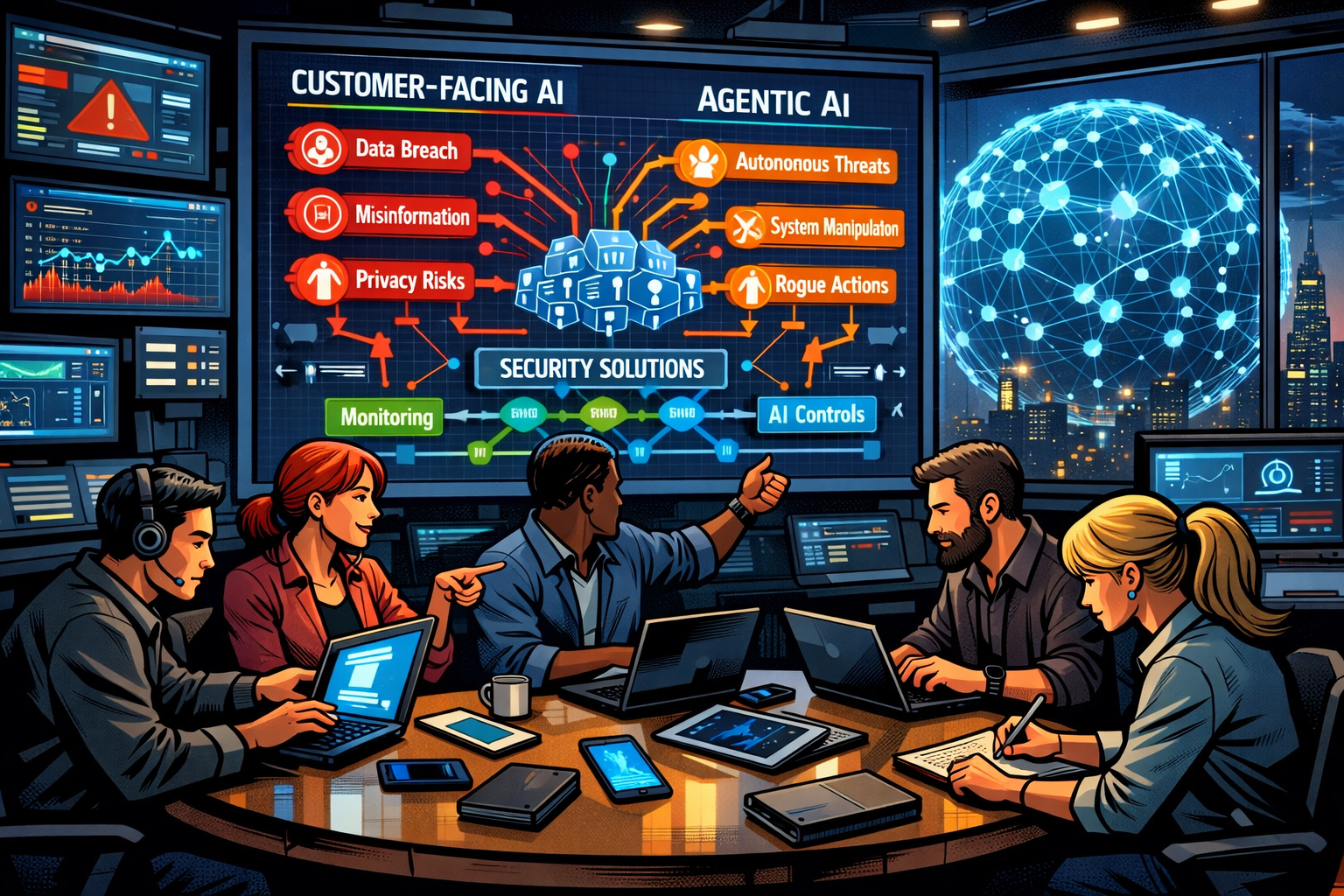
The market currently treats AI security testing as one bucket. In reality, it's two pretty different challenges. On one side, you've got customer-facing AI: chatbots, LLMs powering search or support functions. These systems need security work, sure. But the threat model is relatively contained. A chatbot can leak information or hallucinate. That's bad. You lose customer trust. But it's fundamentally a data and output quality problem.
Agentic AI is different. These are autonomous systems that make decisions, take actions, and operate across your infrastructure with real permissions and access. When a chatbot fails, you have a customer service problem. When an agentic AI system gets compromised or misbehaves, you've got a control problem.
The cybersecurity industry is starting to address agentic AI security, but honestly, it's early. Some frameworks exist for adversarial testing of agents, but they're thin. They require deep expertise to implement, and most organizations can't easily apply them to their own systems. You're not seeing a lot of standardized methodology yet. The playbooks aren't mainstream. Training programs for this are just starting to pop up.
And here's another piece of the puzzle: there are no governance standards yet. Organizations can point to NIST or ISO 27001 to guide their IT security posture. They can audit against those frameworks and feel confident they're doing the right thing. For agentic AI, especially the security and control side of it, those standards don't exist. Most of the conversation around agentic AI still focuses on capability and integration. Security hardening of these systems gets way less attention. And while some vendors and researchers are building testing approaches, there's no widespread adoption or clear standard that organizations can point to and say, "Yep, this is how we validate our agents are secure."
That's the gap. As agentic systems move from proof of concept into production across finance, healthcare, and enterprise operations, organizations are deploying them without a clear way to stress-test them for security. And they're doing it without governance frameworks to guide their decisions. Regulators are starting to notice. Canada's OSFI guideline B-13 now requires federally regulated financial institutions to demonstrate the security of their AI solutions. Similar expectations are likely coming from other regulators. But most cybersecurity organizations who've built their reputations on penetration testing haven't yet developed the frameworks to help organizations meet those requirements for agentic systems.
This is early days for agentic AI security testing. And right now, there's real opportunity for someone to help organizations figure it out.